Blockchain Lab
Delft University of Technology, The Netherlands
Established 29 August 2007
Goal: re-inventing trust and money
TU Delft is home to the one of the largest research groups on blockchain technology. Our work combines running code with novel approaches to broaden and strengthen the cybercurrency field. We aim to provide a secure, scalable, cybercurrency without forks and without the need for confirmations.
Open Source
We are a non-profit lab. We openly share all our findings and refrain from patenting our technology. All our work is shared with the open source community.
Early Pioneers
Our 'Bandwidth as a Currency' research from 2007 together with Harvard University spearheaded approaches with unbounded scalability.
BBC News article.
Ethical Blockchain
Wide-spread acceptance requires a new form of governance: self-governance. This is challenging as even democracy is still a contested concept with a variety of norms.
Enhance Privacy
Privacy is eroding. The Tor project addresses this issue and we are conducting trials with blockchain technology that rewards people who donate their bandwidth.
About us
Delft University of Technology has numerous young, motivated and skilled students at phd, msc, and bsc level working in the Blockchain Lab.
Our research is fundamental, aimed at the development and evaluation of new generic blockchain concepts, and application-driven, motivated by important application areas, such as transaction processing, e-commerce, and logistics. Much of it is experimental, validating the proposed new concepts by means of implementation and deployment in prototypes that are used in the real world.
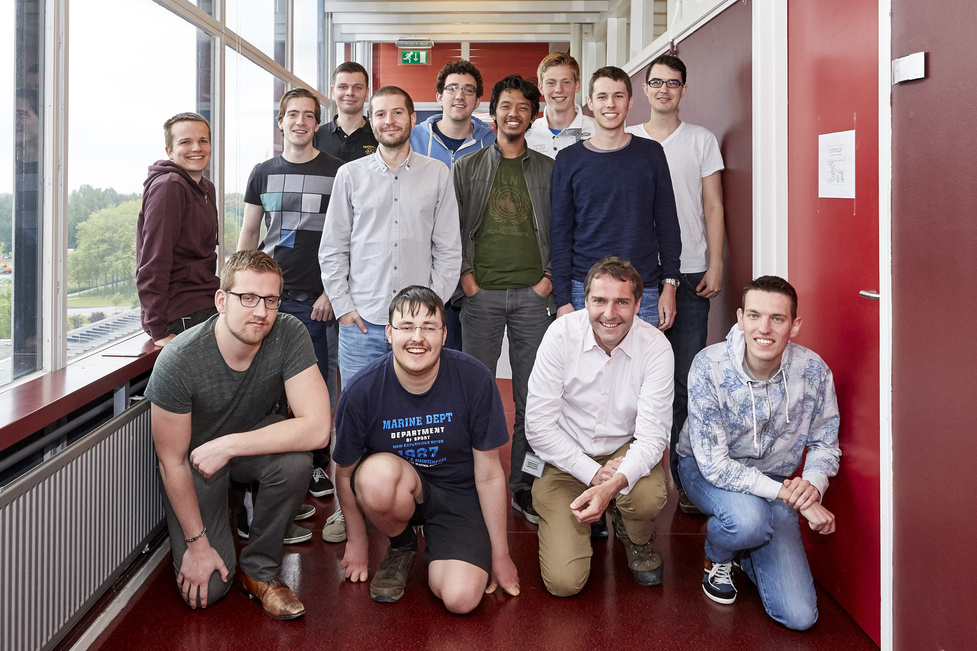
Faculty Team
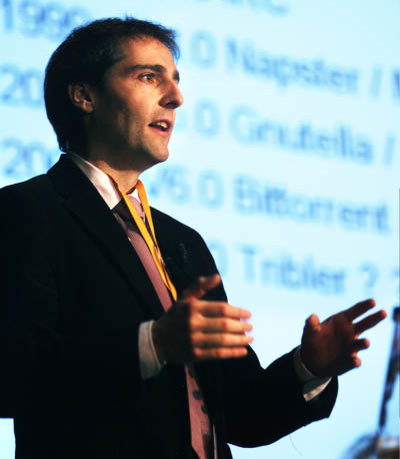
Dr. Ir. Johan Pouwelse
Associate professor, PI

Dr. Zeki Erkin
Assistant Professor, Cryptography expert

Prof. Dr. Dick Epema
Section head, Distributed systems

Prof. Dr. Jeroen van den Hoven
Dean of TPM at TU Delft, Ethics expert
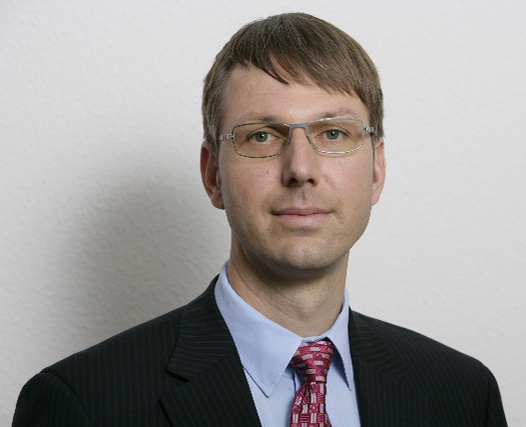
Prof. Dr. Dirk Helbing
Professor of Computational Social Science

Prof. Dr. Ir. Rini van Solingen
Professor of Global Software Engineering

Dr. Zhijie Ren
Postdoc

Quinten Stokkink
PhD Student

Martijn de Vos
PhD Student
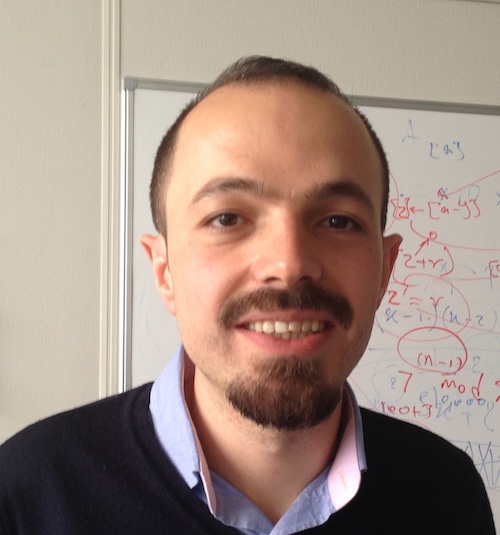
Oguzhan Ersoy
PhD Student

Egbert Bouman
Senior Developer

Vadim Bulavintsev
Developer

Sandip Pandey
Developer
Next-generation: Trust and Scalability
Despite the elegance and popularity of Bitcoin, it has a fundamental problem and is extremely wasteful. Today the default Bitcoin software is hard-limited to only 7 transactions per second globally. All current Bitcoin transactions could be handled by a single 100 Euro smartphone if creation of trust and global consensus did not require an extremely wasteful mechanism.
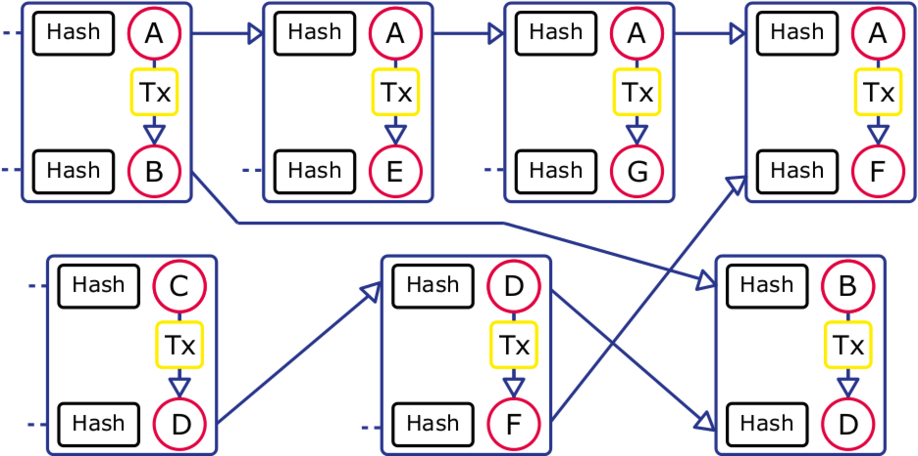
Shown above is our graph-based datastructure for next-generation blockchains. Cardinal design principles are that global operations do not scale, global persistent transaction broadcasts should be avoided, transactions spread to a subset of participants are still irrefutable, and each participant issues and maintains their own blockchain.
Our scalable approach is based on creating trust. It is inspired by traditional equity and bond issues in which the credit quality or probability of payback is essential. We automated the role of credit rating agencies for evaluating the credit quality of each issued individual blockchain.
Our scalable blockchain is based on tamper-proof secure timelines and graph-based data structure, instead of a blockchain used in Bitcoin. For the past 9 years we have focussed on the scalability of cybercurrency and efficient mechanisms for building trust. Our electronic currency design is scalable, prevents the double spending problem, supports offline payments between trusting parties, and does not require controlling servers, central authority or oversight. Key breakthrough of our ongoing work is a proof-of-work mechanism allows nodes to reach a secure, tamper-resistant consensus.
Key publications
Trustchain protocol [IETF Internet Draft]
Laws for Creating Trust in the Blockchain Age
TrustChain: A Sybil-resistant scalable blockchain (poster)
Transaction Propagation on Permissionless Blockchains: Incentive and Routing Mechanisms
A Scale-out Blockchain for Value Transfer with Spontaneous Sharding
TRADE: A Transparent, Decentralized Traceability System for the Supply Chain
A Blockchain Consensus Protocol With Horizontal Scalability
Scientific article of our trial in partnership with Wikipedia.org of 'Bandwidth as a Currency'.
Decentralized credit mining systems
A network science perspective of a distributed reputation mechanism (reputation-based approach against double spending)
An Entry-Guard-based Payment System for Tor
Towards a peer-to-peer bandwidth marketplace
Work accounting mechanisms: Theory and practice (joined work by TUDelft, Harvard, and Berkeley)
Operational Distributed Regulation for Bitcoin
Anonymous online purchases with exhaustive operational security
Contact
Van Mourik Broekmanweg 6, 2628 XE, Delft
3rd floor
The Netherlands